
 MENU
MENUPerformance Cam Selection & Installation Guide.
"We Cam, we saw, we conqured!"
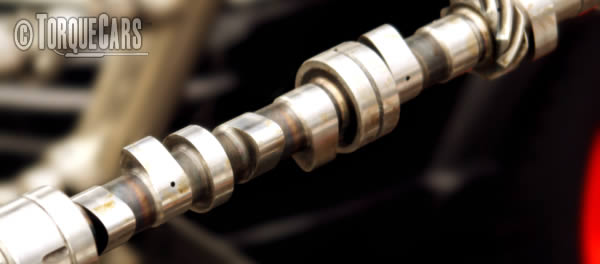
Cam profiles and performance cam durations.
The cam shaft controls the inlet and outlet ports. A performance cam is designed to maximize your engines intake and exhaust durations to make more power.
A pear shaped lobe on the shaft keeps the valve closed until the pointy bit rotates producing lift and opening the valve. Double overhead cams have separate profiles for inlet and outlet ports and are more tuneable than single overhead cams.
The timing of the opening and closing of the port can greatly affect engine characteristics. Manufacturers profile the cams to give good economy and reasonable performance through the low to mid rev range.
See our YouTube Video link based on this article.
Competition or motorsport off road camshafts
Some high performance cams come marked for competition use only.
This is important as a competition car is stripped and rebuilt regularly and the competition cams can wear much more quickly than standard cams completely stuffing any lift benefits you were hoping to gain.
In addition to faster wear they will typically be more aggressive and will ruin the cars tickover, causing a very rough or lumpy idle.
Effectively they boost the top end RPM range power at the sacrifice of the lower end.
Detecting Cam wear
Running a fingernail over the lobe will show if there is any wear particularly in the center where contact is made with the lifter - if there is any more than 1mm wear it is time to replace the cam.
Camshaft Durations and the effect on performance
Different engines have different timing needs and a manufacturer has to fudge things to take a Friday engine into account along with an engine that has done 70,000 miles so you can see there is already vast room for improvement.
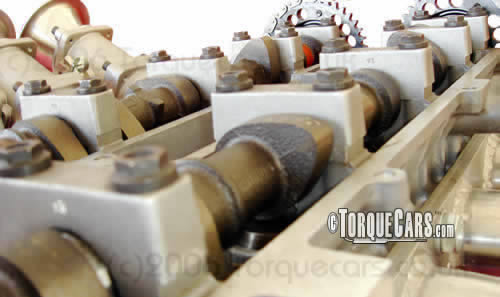
Cams help create more power (HP) in the mid to high rev ranges and come in the following types. (Its worth noting than in most applications high range Torque is unchanged but low range torque can suffer.
The degrees figure relates to the duration of the cam and a full 720° or 2 revolutions of the crank, would not open the valves at all!
This implies that ignition timing must also be reset for cam durations of 260° and above. A longer duration means more time to suck air and fuel into the engine.)
Differences between Mild, Fast Road & Competition Cam Profiles
- Mild Road Cam 257° – 260° Gives low end improvements and used in unmodified engines suitable for all car types and gives a smooth tick over. Fuel economy may actually improve and power and responsiveness will be greater.
- Fast Road cam 270° – 285° Good compromise for a road car the tick over is still fairly smooth and emissions are within legal limits. A good choice for a car used daily and for weekend track use and perfect for a hot hatch. This profile still gives reasonable fuel economy and a choppy tick over.
- Competition cams 290°–320° The best performance profile for an engine which works continually over 3000 revs. The tick over is very lumpy and irregular and the car is lumpy to drive round town. Fuel economy is pathetic and it is unlikely that a car with this fitted will pass any kind of emissions test.
Fine Tuning Your Cams with Vernier Pulleys
You can tweak the cam timing slightly with a vernier pulley, which helps push the power band to the part of the rev range you prefer.

Developments – Rover devised the VVC cam where the cam rotates within a rotating holder and creates a marvellously tunable engine.
The cam durations and lift can be adjusted to match the engine speed – higher revs can give a different lift and duration to a slower engine speed.
Innovations in valve lift and camshaft design
Originally devised for economy the VVC engine has become a tuners dream and in its 1.8 form the engine can be tuned to deliver up to 220 bhp (were not just talking cam modification here). Not surprising then that this engine is fitted to Lotus and MG's.
Hondas VTEC valve timing system is equally impressive and provides two stages of valve timing.
A gear chooses the profile with rpm so effectively there are 2 cam profiles to each valve and a lifter kicks in at a set rpm, so it picks the faster cam profile at a predefined rev range.
From the drivers point of view, as the revs climb the second stage is reached giving explosive power and an aircraft style scream.
You get two cars for your money – an economical round town supermarket cruiser and a track day screamer.
The short cranks in Honda engines give a lot more rev range and redline at around 7000-8000 rpm a lot higher than engines of a similar size.
Installing a Performance Camshaft
When installing a performance camshaft, a few factors must be considered. This includes the choice of camshaft for your application and alignment of cambelt and teeth.
There may be a need to replace other components too, and plenty of checks of clearances needed to ensure the camshaft performs correctly.
Tips on Aligning the Cambelt & Teeth
- Prior to taking off the old camshaft, rotate the engine slowly a couple of turns to see the location of the timing marks on the cam and cam sprockets.
- As the first cylinder piston needs to be at Top Dead Centre (T.D.C). If no timing marks can be seen, then avoid removing the camshaft and seek further advice from the engine manual.
- Once you have the new camshaft ready for installation, it can be tricky to align correctly to the engine internals.
- Firstly, it is a good idea to wash your camshaft in minerals and spirits as new camshafts have rust prevention coating. Then lubrication should be applied to break in the metal-on-metal interaction.
- Make sure the new camshaft is aligned with the timing marks from the old camshaft.
If they are out of alignment the camshaft will be out of phase with the crankshaft and valves are incorrectly lifted and closed. Resulting in hitting the fast-moving pistons and eventually engine damage. - The timing chain and lifters need to be removed. Then the sprocket can be placed back onto the camshaft and turned by hand to test if it is a smooth rotation.
When inserting the new camshaft, take care and rotate it as it inserts into the block to prevent scoring on the cam bearings. - Align the timing marks correctly once the timing chain and sprocket (or belt and pulley) are installed.
- Then ensure all bolts are tightened to the correct torque measurement.
- Lubricate the lifters before installing, and make sure these are also replaced on older engines to ensure correct contact from tappet to cam lobe.
Making sure each lifter, once in place, can move freely. If they do not revolve freely the cam and lifter can fail, as the pattern contacting between cam and lifter face are not dispersed correctly. - A valve shim would need to be upgraded or replaced too with an upgraded camshaft. Due to the softer metal construction of the shim, it allows the gap between the top of the valve and the crankshaft lobe.
Twin cam cars do not usually require valve adjustment because the lifters are fed by hydraulics in modern engines.
Do you Have to Replace Shims and Other Parts as Well?
Only on older cars are shims installed to set the clearances between the top of each valve and the tappets. Depending on your engine it is important to consult the manual or an engine expert to determine this distance, measuring them with a feeler gauge.
What is Valve Lift and How Does the Cam Affect This?
When upgrading the cam on your engine, the valve lift is distance measured in mm for how much the valves open. The longer the camshaft lobes, the bigger the lift on the exhaust and intake valves.
A performance camshaft may have bigger lobes which give greater flow. In turn provides more peak power and faster lap times. Only slightly affecting performance in lower rev ranges.
Camshaft design is a strict science. With limits on how large the lobes can be. As with a high lift, the lobes can be taller, but this will put enormous pressure on the camshaft and valvetrain.
Needing to upgrade the valvetrain too, for reducing ramp angle and therefore lift. Or even increasing the time when lifted – which will all affect your engine’s powerband.
Lift is one consideration; the other is the valves colliding with pistons. More valve movement due to a bigger lift means they could even clash with the pistons as they enter the combustion chamber!
Why You Should Check and Adjust Valve Lift.
The valves open and close thousands of times per minute during operation, as the camshaft rotates. It is vital that the measurements are correctly adjusted for your engine application as
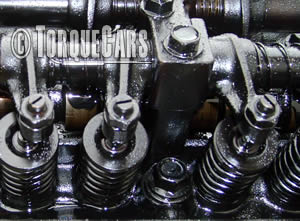
they control the air intake and exhaust gasses after combustion.
Incorrect valve clearance can cause poor performing engines and rough at idling because of mis-timing of the valves opening to allow the engine to breathe.
A high clearance causes clattering of valves which causes damage in the long term to valves, camshaft lobes and rocker arms.
Importance of Getting a Remap Done.
After upgrading your camshaft thus adjusting the valve lift distance and timing, it is vital to ensure your engine is running optimally.
As you may already be aware, the ECU controls the amount of fuel and air, ignition timing and boost pressure of an engine, depending on the rev range and gearing. This makes sure you are getting the most power out of your car in the most consistent way by having a smooth power curve.
The power curve is determined when an engine is running on a dynamometer (or Dyno for short).
A programmable ECU means a mapping expert can accurately alter the fuel, ignition, and boost pressures to match your setup of ignition coils and spark plugs, valves, forced induction method, fuel injectors and of course camshaft.
A tune/remap can utilize all upgrades on an engine and increase performance of a car just by using software. This also prevents any knocking (combustion not taking place at a suitable time during the cycle), an incorrect mix of air and fuel where an engine may be too rich (too much fuel for the amount of air) or too lean (too much air for the amount of fuel) which can cause strain on an engine or an incomplete combustion cycle.
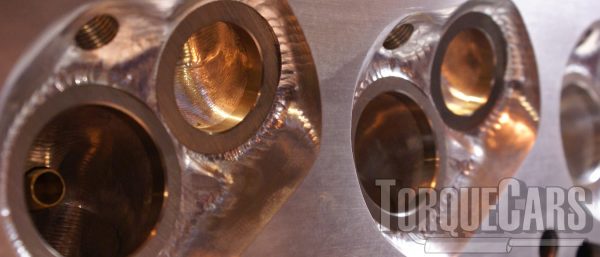
Will Flowed and Ported Heads Affect the Cam?
If an upgraded cam is installed, and the valves lift higher, for a longer duration within your engine, it may be worth considering porting your heads for even greater performance. But do they affect the camshaft?
Porting your head involves removing material to allow a bigger inlet and outlet opening on your engine, allowing more airflow into the combustion chamber.
If injectors are upgraded and provide more fuel, then your power output should increase after a remap.
The camshaft allows for higher valve lifting to ensure more air is forced in and out of an engine and add to your upgrade to provide more power. The downside is not carefully taking away material, as if this happens you will need a new cylinder head and will need to start again.
A consensus from the performance community is that a ported head is only a minor upgrade in performance if the cam is also not upgraded. Therefore, both need to be carefully tuned and play a part in increased power. It is important to speak to a specialist who will guide you through the ratios of cam lobe height improvement and how much porting is required for your cylinder head.
Flow ‘bottlenecks’ are the major factor too. Either with the intake and air filter before it enters an engine, the head porting itself, or the exhaust header/manifold and piping being restrictive. If they are not optimized, then the upgraded cam cannot be fully utilized and vice versa.
To find the best cam profile for you car why not join our friendly community of car tuners and car enthusiasts and benefit from car specific recommendations.
Please Check out my YouTube channel, we're regularly adding new content...
 Click to accept YouTube Cookies & Play.
Please share this page with your friends on :


PLEASE HELP: I NEED YOUR DONATIONS TO COVER THE COSTS OF RUNNING THIS SITE AND KEEP IT RUNNING. I do not charge you to access this website and it saves most TorqueCars readers $100's each year - but we are NON PROFIT and not even covering our costs. To keep us running PLEASE Donate here
If you liked this page please share it with your friends, drop a link to it in your favourite forum or use the bookmarking options to save it to your social media profile.
Feedback - What do You Think?
Please use our forums if you wish to ask a tuning question, and please note we do not sell parts or services, we are just an online magazine.
Help us improve, leave a suggestion or tip
Please watch this video and subscribe to my YouTube channel.
One Response to “Camshaft Guide”
I’m planning to run a greedy turbo kit on my Suzuki Jimny JB74, I want to have the best engine components (cams, valves springs, pushrod…ect) that’s reliable for daily use and long lifetime.