
 MENU
MENUSpark plugs
"A bright spark"
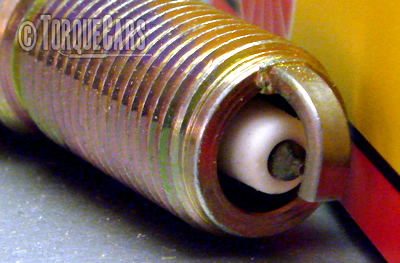
Spark plugs are an essential element in petrol engines but the spark plugs are often overlooked.
For the best combustion you want a good strong spark.
A bigger spark will ignite the air/fuel mix more effectively.
It is the burn rate, the expansion of the flame front, which causes the piston to change direction and produces the power stroke.
Peak power is reached when the flame front is at the point of maximum expansion. For smooth running it is essential that this happens at the same point each time in the cycle and is synchronized across the cylinders. The spark initiates the flame so a good, strong, consistent spark is essential for a consistent burn.
We also have a guide covering how to choose performance spark plugs which discusses all the main types of spark plug designs and construction methods to help you decide which plug is the right choice for your tuning project.
Watch our video on Performance Spark Plugs and be sure to subscribe to our channel.
Spark plugs are heat rated. Fitting spark plugs that are too hot can cause premature ignition, or engine knock, which can cause serious damage to your engine.
Spark plug technology has come a long way. New materials are in use which have lower resistance and give a longer life. State of the art Iridium plugs will typically last for 40,000 miles and will not require regapping or deglazing.
Copper tipped spark plugs benefit from deglazing - the removal of built up deposits. This can be done with some Emery paper, sanding paper or a soft wire brush. Take care not to scratch the contacts or ceramic coating. Glazing inhibits the spark consistency and strength so deglazing maintains efficiency.
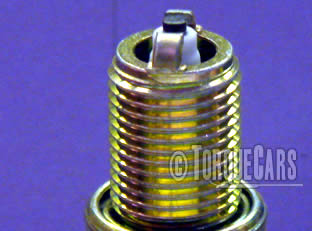
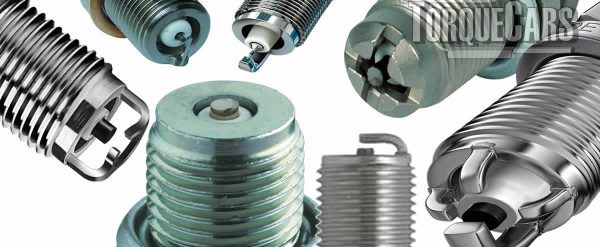
There are a several different types of electrodes. The overall aim is to get the biggest spark, one that is fat as well as long. A good spark gives a better burn.
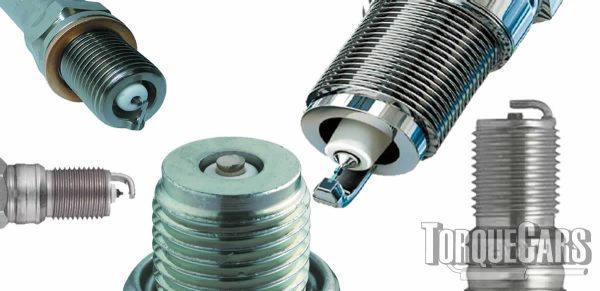
You can choose between split tip electrodes, double or triple electrodes. For most cars you won't feel a difference between these and a good set of standard plugs with a copper core. Only one spark is produced regardless of how many electrodes the spark plug has. It's worth noting that multi electrode spark plugs may last longer.
Fitting spark plugs.
Fitting spark plugs is a simple enough job. Just make sure you have the correct tool. Locate the ignition leads going into the center of the engine.
You may need to remove the engine cover. These are usually plastic and are screwed or clipped on.
Most cars have 4 cylinders in line but there are several other engine configurations; 5 cylinder engines will have 5 leads and a V6 will have 2 banks of 3. Regardless of the configuration there will be one lead for each spark plug at the top of each cylinder.
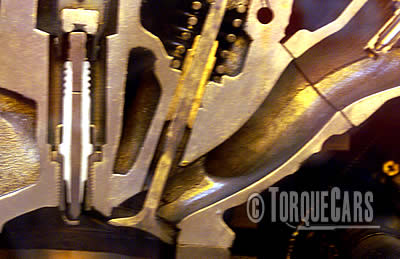
A cross section of an engine showing the spark plug cross section (white) to the left of the image.
It is good practice to change the plugs one at a time to avoid getting the leads mixed up. This would cause the spark plugs to fire in the wrong order which could damage your engine.
Working from left to right take out the first plug using the removal tool. The state of the plugs will tell you a lot about the condition of your engine. Lay them out in order of removal for later inspection.
When fitting new spark plugs it is vitally important to make sure they are fitted straight. To start with, only screw it down until the plug is finger tight. In some engines you can easily reach the plug tip with your fingers, in other engines you will require the tool - if so, hold the tool like a pencil and do not use any leverage at first.
Whichever method you use, do not tighten beyond finger tight initially. Once it is as tight as you can get with your fingers then tighten a further quarter turn using the plug tool.
The engine block is softer than the plugs so any damage from cross threading them is going to occur on the engine. This is why it is important to ensure they are straight. If you have a cross threaded spark plug then a helicoil or re cutting the thread will usually fix the problem.
Move on to the next plug and repeat the process. When you have replaced all the plugs inspect the old plugs. They should all be the same color indicating a balance in the engine firing and fuelling.
A healthy spark plug has a dark grey soot on it.
Light grey or white soot indicates that the engine is running too lean.
Black soot indicates that it is running too rich.
Oily or greasy spark plugs can indicate major engine wear. You should investigate this more fully.
Cracks on the plug can be caused by excessive heat. This should be investigated especially if present on 2 or more of the plugs.
Please join us in the forum for more technical information about spark plugs and spark plug selection for your vehicle application.
Please Check out my YouTube channel, we're regularly adding new content...
 Click to accept YouTube Cookies & Play.
Please share this page with your friends on :


PLEASE HELP: I NEED YOUR DONATIONS TO COVER THE COSTS OF RUNNING THIS SITE AND KEEP IT RUNNING. I do not charge you to access this website and it saves most TorqueCars readers $100's each year - but we are NON PROFIT and not even covering our costs. To keep us running PLEASE Donate here
If you liked this page please share it with your friends, drop a link to it in your favourite forum or use the bookmarking options to save it to your social media profile.
Feedback - What do You Think?
Please use our forums if you wish to ask a tuning question, and please note we do not sell parts or services, we are just an online magazine.
Help us improve, leave a suggestion or tip
Please watch this video and subscribe to my YouTube channel.
One Response to “Choosing the best performance spark plugs”
Thank so much but is there any type or specified spark plug for a v6 engine?