
 MENU
MENUTechniques for Drag racing.
"Gone to Launch - back in 10 seconds!"
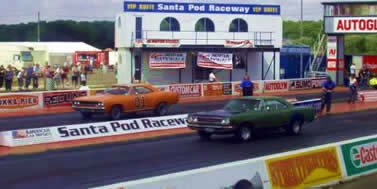 Your reaction time can make all the difference in a quarter mile race.
As soon as the lights change to Green the average TorqueCars member takes around 1.5 - 2 seconds to get the car moving off the line.
You can probably judge the light changes after a few runs and cut precious time on the launch. To keep your reaction time sharp avoid alcoholic drinks and heavy greasy food and get plenty of sleep the night before.
Drink only water, even stimulants can inhibit your reaction time. The best food to eat would be pasta which gives a slow release of energy without making you feel lethargic. Also PRACTICE PRACTICE PRACTICE. The launch is probably the single biggest factor that affects your time in drag racing aside from the cars power so practice your launch techniques over and over again.
Adjust your seat so you are not having to stretch for the pedals and can grip the steering wheel without having to lean forward. Bad posture can reduce your reaction time. Ensure your harness is secure but not restrictive and concentrate on the track ahead of you rather than the other driver.
For the duration of the drag race your aim is to keep the engine in the power band and maintain traction. If you get your car tested on a rolling road the resulting graph will show where this power band is.
For most cars the power will start to tail off again about 1000-2000 rpm before the red line, so this is the logical place to change gear. For some more tips on engine tuning click here.
Gear changes again take precious time, some drivers keep their foot on the accelerator during gear changes to keep the revs up. This method however will not work on cars which put down a lot of power as you will just be introducing wheel-spin, rather you should try and match the engines revs with the speed of the drive-train and wheels on each gear change.
You will find a fast power gear change technique that works well for you. Each car is slightly different. Some require only a minimal dip of the clutch if they have a high biting point, whereas others require the clutch pedal to travel the full distance.
Pulling the car out of gear and depressing the clutch just before you select the next gear works quite well. Remember to adjust the revs if your car is producing a lot of power as a loss of traction can easily rob you of valuable time.
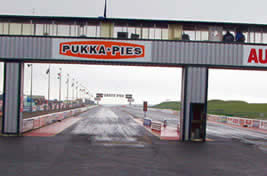
You need to balance the traction with the amount of power unleashed. Some drag racers rev high to get wheel-spin and then pull back of the throttle as they launch and when the tyres bite they put on the power again.
In a very powerful car you need to keep a careful control on the accelerator and reign in some of the tendency to wheel-spin.
4 wheel drive cars seem to have loads of traction off the line and certainly perform well but you can break a 4 wheel drive car if you ask too much of it so use the clutch to control the amount of power you are putting down.
2 wheel drive cars will always suffer from wheel-spin, FWD more than RWD so you need to determine how much you can allow for the best launch possible. Riding the clutch at launch will help control the wheel-spin and you will eventually be able to feel the point of most grip as you feather the clutch and accelerator pedals (use the clutch more than the accelerator at launch to control the power going to the tires because you want to get the engine into its power band).
Manufacturers pressures are designed to give even pressure across the whole tread. Reducing pressure will allow the tire to 'cup', reducing grip in the Centre of the tire. Start with recommended pressures and do a standing start, spinning the tires.
Look at the tire marks left. If they are an even shade over the whole width of tire then leave well alone. If the marks are darker in the Centre, try reducing pressure slightly. If the marks are lighter in the Centre, increase pressure. It is a matter of trial and error to get an even deposit of rubber on the road over the entire width of tread, not simply reducing pressures.
Stay focused on the space beyond the finish line. I've seen so many drivers just ease off prior to the finish line.
Fitting larger pedals will give your more scope for control and the addition of a quick shift gear lever will certainly make gear changes a little faster, although the margin for error is reduced with the shorter, tighter throw. See our car setup article for more tips on car tuning for the drag strip here.
When you start running 14 seconds or less you should start looking at aerodynamic improvements to your car. Wing mirrors can be removed or replaced with smaller models. An engine sump shield can also be fitted to improve the flow of air under the car. Join us in our drag racing forum to discuss all aspects of drag racing with our quarter mile-aholics.
Please Check out my YouTube channel, we're regularly adding new content...
 Click to accept YouTube Cookies & Play.
Please share this page with your friends on :


PLEASE HELP: I NEED YOUR DONATIONS TO COVER THE COSTS OF RUNNING THIS SITE AND KEEP IT RUNNING. I do not charge you to access this website and it saves most TorqueCars readers $100's each year - but we are NON PROFIT and not even covering our costs. To keep us running PLEASE Donate here
If you liked this page please share it with your friends, drop a link to it in your favourite forum or use the bookmarking options to save it to your social media profile.
Feedback - What do You Think?
Please use our forums if you wish to ask a tuning question, and please note we do not sell parts or services, we are just an online magazine.
Help us improve, leave a suggestion or tip
Please watch this video and subscribe to my YouTube channel.