
 MENU
MENUNew technology will deliver both power and economy.
"The Green Power struggle"
Car makers are being forced by legislation to cut emissions.
We are now judged by other motorists on the perceived greenness of our cars.
Environmentally friendly motoring has become a media obsession.
We could argue that the major cause of our pollution is not the humble motor car but rather our consumer led lifestyles, frequent flights and need for ever more power to drive the gadgets and devices we put in our homes.
We shall look briefly at trends in car production over the last few years and see what the future is likely to hold.
Over the last 20 years cars have got heavier, average power output has increased and cars are also larger. Take an average 20 year old hot hatches putting out about 150bhp being able to keep up with modern cars with 200bhp. When you look into this seeming anomaly you realise that all of the additional crash protection adds weight to the car and the average weight of a family car has increased from 1200kg to 1500kg. The final gearing is also longer with the introduction of heavier 5 and 6 speed gearboxes to reduce fuel consumption further. We also demand things like power steering and air conditioning which also add to the weight and reduce the real life power output of the engine.
In a bid to make car engines more efficient we are going to see more turbo charged vehicles, which allow relatively small engines like the 1.4 to put out similar power to a 2.0 engine. Engine management systems are also evolving and will start to control the shape of the fuel spray and we are likely to see systems that control the shape of the intake valve and aperture and many other things which are at the moment not directly controllable by the engine management computer.
Luxury car makers and also performance car makers are also looking to cut the weight and size of the cars they produce. Ferrari have disclosed in a recent interview that they plan to cut weight and produce cars with a higher power to weight ratio. The power to weight ratio is an interesting measure of a car for example a 2000kg car with 1000bhp will not be as fast as a 1000kg car which has a more modest 600bhp engine.
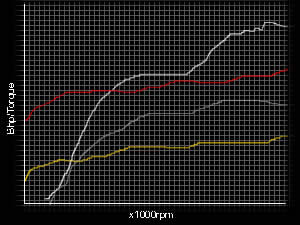
All makers are jumping on the power/economy development train with companies like VW which have released an engine powered by both a supercharger and a turbocharger which they refer to as the twincharger. Innovations like this will increase the efficiency of engines and allow makers to increase power, or improve fuel economy. Years ago Rover produced the VVC engine with very clever control of the cam and intake valves which was an economy driven development but many saw the performance possibilities and the engine has been tweaked and tuned to over 200 bhp.
SAAB also released an engine which was able to adjust its volumetric capacity to increase efficiency and BMW are producing M models with driver selectable parameters allowing you to decide how much power/torque/mpg you want from your car. TorqueCars betting is that most car manufacturers will go for better fuel economy and this is fantastic from a tuners point of view as a simple tune/remap can alter those parameters and produce a higher powered engine for track day use. In car engine management is also going to be a big thing, allowing the driver to choose between economy for the family holiday or performance when he is wanting a bit of fun in the twisty roads.
Recent developments from motorsports are finding their way into production cars. Materials such as Carbon fibre finds its way into the chassis, panels, light weight high friction brakes, low drag tyres, light weight suspension components, and more efficient engine designs. Taking all of this into account we can start to get some ideas on modifications of our cars. Weight reduction should be our aim and we will need to start asking questions like, which are the lightest tyres you do and looking at the weight of components. A big weight saving can come from adding a carbon fibre bonnet which is substantially lighter that most standard metal ones. You will hear more noise from the engine but that adds to the driver experience.
Please Check out my YouTube channel, we're regularly adding new content...
 Click to accept YouTube Cookies & Play.
Please share this page with your friends on :


PLEASE HELP: I NEED YOUR DONATIONS TO COVER THE COSTS OF RUNNING THIS SITE AND KEEP IT RUNNING. I do not charge you to access this website and it saves most TorqueCars readers $100's each year - but we are NON PROFIT and not even covering our costs. To keep us running PLEASE Donate here
If you liked this page please share it with your friends, drop a link to it in your favourite forum or use the bookmarking options to save it to your social media profile.
Feedback - What do You Think?
Please use our forums if you wish to ask a tuning question, and please note we do not sell parts or services, we are just an online magazine.
Help us improve, leave a suggestion or tip
Please watch this video and subscribe to my YouTube channel.