
 MENU
MENUCornering techniques to give the perfect racing line.
"Don't cut corners"
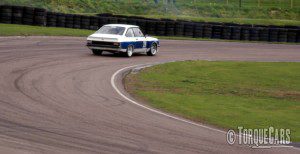 When taking corners the aim is to keep the car balanced throughout the bend and you need the highest exit speed you can manage.
We are talking balance between the front and rear of the car as the car will be likely to skid if weight is biased to the front or rear.
When on the track all movements, acceleration, braking and steering should all be done steadily and progressively. Sharp inputs usually upset the poise and balance of the car.
When you are driving near the limit of adhesion you really want to spread the weight evenly other wise overloading the front or rear tyre can cause you to lose grip.
When you lift off the throttle or brake the weight is thrown forward, when you accelerate the weight is thrown to the rear. Using a trailing (semi open) throttle you can keep the corner grip and take the corner at the fastest speed possible.
These techniques should only be applied on the track - it is foolish to push your car to the limits on the roads without the safety of run off areas. Good techniques learnt for the track will one day come in handy when you hit a slippery road or if road conditions change suddenly.
Braking on a bend is a big no no. If you remember one thing from this article make sure it is never to brake on a bend. Braking really upsets the cornering balance and will nearly always cause problems especially if hard braking is required.
With good anticipation you should have the cars speed and balance setup before you enter the corner.
Convert a bend into a series of straights with little steering movements throughout and this will allow you to apply the brake on the straights.
On a race track the important thing is your exit speed. We all know that a car which has a greater distance to accelerate will be going faster than a car which has only been accelerating for a shorter distance.
When approaching a tight apex slow up and aim to take the full apex of the bend as soon as possible leaving yourself a long gentle arc from this apex point. By doing this you are turning a long sweeping bend into a tight bend with a long straight and this means that you will have more chance to accelerate and benefit from a higher exit speed.
This does not seem to make much sense as other cars may brake later for the corner and take the corner faster but you will have a much greater exit speed using the TorqueCars preferred cornering method, which your competitors will be unable to match with late braking, and this is what gives you the advantage.
On complicated chicanes and multi corners you will learn the best approach for each and every bend which will vary from track to track. You will learn that each track has its own personality. When you first go onto a track TorqueCars recommend that you stick to a slow in and fast out approach and on sweeping bends turn it into a series of tight bends and straights concentrating on the maximum exit speed by leaving the final straight as long as possible.
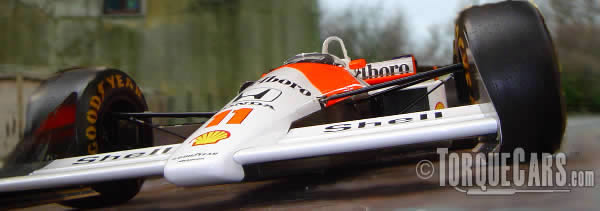
When it comes to the racing line you should be using the full width of the track as close to the edges as you dare. Keeping your hands on the wheel at all times will enable you to have a quicker reaction to any required adjustments to steering lock.
Feed the wheel through your hands and avoid the temptation to palm steer, a clipped track edge can cause wheel deflection and cause you to lose control unless you are ready to react by counter steering and gripping the steering wheel.
When driving in snow, ice, rain and on wet leaves it is more important than ever to keep the balance of the car through the bend and in these conditions the trailing throttle should only be maintaining the current speed rather than accelerating through the bend.
It is also vitally important to be aware of other cars around you at all times. A crash at high speed can be particularly nasty and despite the safety aspects of a track you must maintain your vigilance at all times.
Drifting into a bend can be a useful technique if you need to lose speed but is best avoided as the fastest cornering technique involves all four wheels gripping the road. To discuss the finer points of track days and car control join our forum.
Please Check out my YouTube channel, we're regularly adding new content...
 Click to accept YouTube Cookies & Play.
Please share this page with your friends on :


PLEASE HELP: I NEED YOUR DONATIONS TO COVER THE COSTS OF RUNNING THIS SITE AND KEEP IT RUNNING. I do not charge you to access this website and it saves most TorqueCars readers $100's each year - but we are NON PROFIT and not even covering our costs. To keep us running PLEASE Donate here
If you liked this page please share it with your friends, drop a link to it in your favourite forum or use the bookmarking options to save it to your social media profile.
Feedback - What do You Think?
Please use our forums if you wish to ask a tuning question, and please note we do not sell parts or services, we are just an online magazine.
Help us improve, leave a suggestion or tip
Please watch this video and subscribe to my YouTube channel.
2 Responses to “The racing line and high speed cornering techniques.”
Do not agree with”feed the wheel thru your hands “bit and neither does The Stig in his book.I use the 9&3 fixed hand position for the best control on a track and in combination with the HENDON method on the street depending on the tightness of the corner.
TRAIL BRAKING into a corner is safe as the front to rear balance is already set whereas IF you apply the brakes when already turning it will / can result in loss of control / spin due to the sudden weight transfer to the front and lightening the rear end and losing rear end grip.We used to demonstrate this at driver training days in emergency lane change situations.